
The scheme CAEPLA has been warning landowners about for many years.
The government of Manitoba is expropriating an 18 hectare riverside forest in St. Norbert, a semirural community on the south side of Winnipeg.
The Lemay Forest, named after a family farm founded in the 1870s and subsequently donated to the Roman Catholic Church, has been a popular recreation space among locals for decades.
The property was purchased by a developer in 2023 for $1.5 million with plans to build an assisted living facility on the site.
When word got out about the development which would require the removal of a large percentage of the trees, some local residents got together to oppose the project.
"While many of the protesters are Indigenous, most of the trees are not"
They were soon joined by Indigenous and environmental activists from outside the area who set up permanent protest camps.
The green activists have described growth on the parcel as ecologically sensitive and unique.
But while many of the protesters are Indigenous, most of the trees are not — they are non-native species that arrived with European settlers in the late 1800s.
The protesters later began to claim that because a small orphanage run by nuns had been based on the site, where many residents had been indigenous, it was probable "mass" and "unmarked" graves would be found on the grounds.
The number of children's remains claimed to be present ranges as high as 3,000 — while records indicate only 2000 children ever resided at the site throughout its 43 years of operation.
During rezoning in the early 1970s (around the time St. Norbert was incorporated into the City of Winnipeg) the remains of fifteen children were exhumed from the former orphanage's small cemetery and relocated.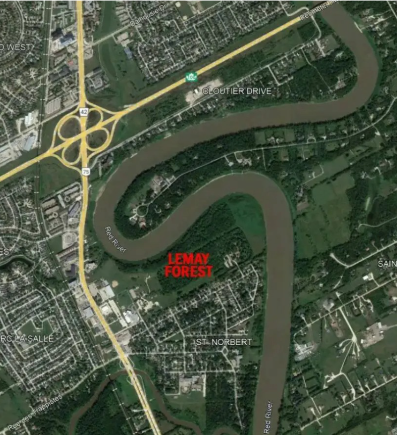
Formula for Expropriation
No other remains have been found since, though it is alleged Ground Penetrating Radar (GPR) has indicated a number of "anomalies" on the site.
This is a pattern — some might suggest a formula — that CAEPLA has for many years been warning landowners about.
Green and Indigenous activists can target a property, express concerns for the environment or allege the remains of children are present in "mass" "unmarked" graves, generate political attention and rely on the government to expropriate in order to appease activist demands.
To date no children's remains have ever been found at any site in Canada targeted by Indigenous activists, including when extensive GPR searches have been conducted.
Indeed this happened in 2023 at a commercial campground near Brandon Manitoba, as the Pipeline Observer reported to you at the time.
This is a politically driven threat posed to the property rights of all landowners that can result in loss of income and ultimately expropriation — and is increasingly doing so.
Farmers are not immune to this threat.
Pipeline landowners are even more vulnerable because the government, in the form of the Canadian Energy Regulator (CER), is already on your land and has Reconciliation as an explicit mandate.
CAEPLA does not foresee this mandate changing under the newly re-elected Liberal government.
Meanwhile, premier Wab Kinew has announced that the Lemay Forest will become the newest provincial park and offered the owners of the property more than what they purchased it for.
The offer has been rejected.
Which is not surprising. The province cannot simply decree what the property is "worth."
Property values are arrived at in markets only by the voluntary agreement of a willing buyer and a willing seller.
Manitoba taxpayers are being forced to fund compensation for a forced taking from a landowner that does not wish to sell.
Expropriators always proclaim their "legal" land thefts are for "the greater good."
In this case the "greater good" would seem to be that of this landowner's neighbours whose calculus no doubt concludes that nearby recreational forest land enhances their own property values.

Do you like this page?