
Recent book by a UK archaeologist says British farmers survived the Fall of Rome just fine…
A controversial book released just as Covid began makes startling claims about the role of property rights in one of the biggest chapters of European history.
The Emergence of the English, a groundbreaking book by University of Cambridge archaeologist and historian Susan Oosthuizen, is now gaining attention for its surprising conclusion:
There were never any Anglo-Saxons.
As in, not only was there never any such people, there was never a barbarian invasion of Britain after the Romans left in AD 400.
No slaughter, enslavement, or displacement of Britons by Germanic barbarians called Angles, Saxons, or Jutes ever happened.
Oosthuizen says an archaeological and historical analysis of property rights proves it.
The short book is a colourful, fast-paced, and fact-packed read that you won't want to put down.
Even if you find the claim about Anglo-Saxons sensational, you will find the author's scholarship on property rights profound.
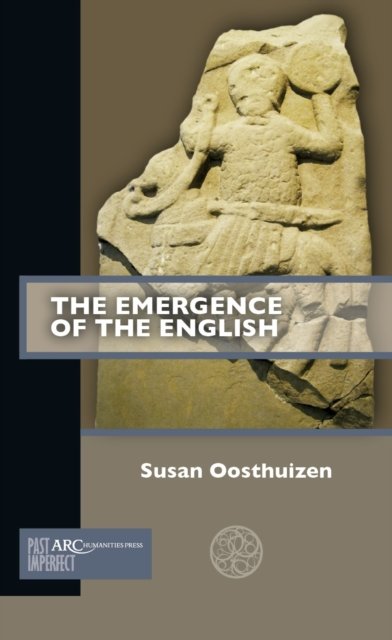 Continuity, Not Conquest: How Property Rights Shaped Post-Roman Britain
Oosthuizen specializes in the early medieval period with a special focus on the evolution of property rights, governance, and agricultural systems. Her research challenges traditional narratives of abrupt cultural change, emphasizing continuity in land tenure and institutional structures from Roman Britain into what is known as the Anglo-Saxon period.
In The Emergence of the English, Oosthuizen argues that property rights and land tenure continuity played a central role in the transition from Roman Britain to early medieval England. She challenges the traditional “invasion and displacement” model, asserting that the persistence of landholding structures indicates a gradual cultural transformation rather than a violent replacement of the native population by "Anglo-Saxons."
Germanic-speaking migrants arrived mostly from what is now northwest Germany, the Netherlands, Belgium, and northeast France — not over the course of a couple of decades, but over several centuries.
Oosthuizen highlights how agricultural and settlement patterns remained largely intact during this period, suggesting that existing landowners and institutions endured despite new political influences. She points to the continuity of common-field farming, estate management, and customary rights as evidence that native elites retained control or integrated incoming aristocrats into established systems. Rather than seizing land outright, Continentals assimilated into existing frameworks, leading to an evolution rather than a rupture in property ownership and governance.
The End of Roman Taxes and the Rise of British Prosperity
Beyond property rights, Oosthuizen’s thesis is multi-faceted. One intriguing finding of her research suggests that far from experiencing economic collapse when Rome withdrew, Britons on the contrary became wealthier and healthier.
This is because when the Roman Empire ended in Britannia, so too did Roman taxes. Which meant farmers needed less land for grain to feed insatiable Rome and could convert more to pasture to pursue animal husbandry.
Oosthuizen further argues that the spread of Old English was likely the result of bilingual interactions rather than a complete linguistic takeover. Similarly, she suggests that Romano-British legal traditions adapted over time rather than being wholly replaced, allowing for the emergence of new governance structures rooted in earlier practices. The archaeological record, she notes, does not show a large-scale disruption in land use or settlement patterns, reinforcing her argument that societal transformation was a negotiated process rather than an abrupt conquest.
The Deep Roots of Property Rights in English-Speaking Civilization
By focusing on property rights and institutional continuity, Oosthuizen reframes the emergence of the English as a process of elite assimilation, legal adaptation, and gradual linguistic shift. Her work aligns with broader historical perspectives that emphasize continuity over catastrophe during cultural transitions.
While her arguments are compelling, they remain subject to debate.
Yet what seems clear is that a tradition of property rights — dating from at least the Iron Age and in full force and effect through four centuries of Roman rule — was the deciding factor in the founding of what was to become England.
Ultimately, The Emergence of the English provides a fascinating and inspirational perspective for today's landowners.
It reminds us that property rights and agriculture go hand in hand — and have done for thousands of years — proving both provide the basis for civilization and stability in the English-speaking world and beyond.
CAEPLA's commitment to property rights is a commitment to an ancient tradition that makes your family's farming and ranching prosperity possible today — a tradition that ensures the strength and stability of society itself.

Do you like this page?